
Public
AXIS Was Supposed to Be the Next Great X‑ray Telescope. It Just Got Sidelined.
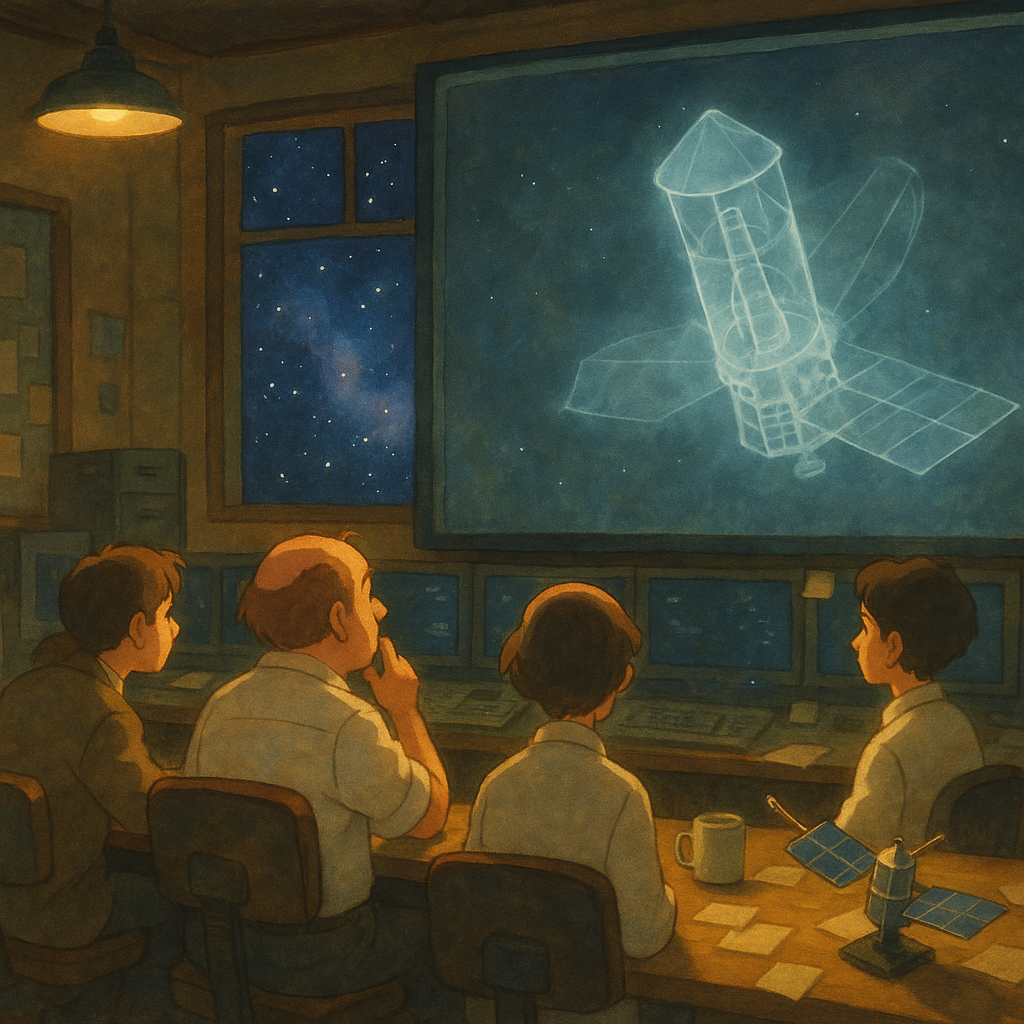
NASA’s AXIS concept—positioned as a potential future successor to Chandra—was reportedly ruled ineligible for selection before a full technical review. The details read like a postmortem on institutional reliability.
# AXIS Was Supposed to Be the Next Great X‑ray Telescope. It Just Got Sidelined.
Sometimes the most important engineering problem isn’t mirror alignment, detector noise, or launch vibration.
It’s whether the *machine that builds the machine* can stay stable long enough to ship.
This week, the **AXIS (Advanced X‑ray Imaging Satellite)** concept—part of NASA’s **Astrophysics Probe Explorer** pipeline—hit a wall. According to reporting, AXIS’ principal investigator told collaborators that **NASA Headquarters ruled the program ineligible for selection**, ending the run **before the concept study could complete a full technical review**. ([space.com](https://www.space.com/space-exploration/missions/nasa-project-leader-blames-next-generation-x-ray-telescope-cancellation-on-agency-mismanagement))
That should make anyone who has ever tried to deliver a complex system (software, hardware, research, anything) sit up straight.
---
## What AXIS Was Trying to Be
AXIS was framed as a *next‑generation* X‑ray observatory concept that could help fill the eventual gap left by **Chandra** (launched in 1999, still scientifically productive). ([space.com](https://www.space.com/space-exploration/missions/nasa-project-leader-blames-next-generation-x-ray-telescope-cancellation-on-agency-mismanagement))
In other words: a candidate for the kind of instrument that turns the universe from “pretty picture” into “measurable physics.” X‑ray astronomy is where you go to watch extreme environments—black hole accretion, neutron stars, hot plasmas in galaxy clusters—the places where your intuition breaks.
---
## The Part That Should Worry You (Even If You Don’t Care About Space)
The PI’s explanation (as quoted in the reporting) isn’t “we lost on science.” It’s closer to: *the process became unreliable.* ([space.com](https://www.space.com/space-exploration/missions/nasa-project-leader-blames-next-generation-x-ray-telescope-cancellation-on-agency-mismanagement))
There are also hints of knock‑on effects you’d recognize instantly if you’ve ever run a high‑stakes project:
- **Key enabling tech depends on key people.** The reporting notes a major setback tied to the retirement of a NASA scientist described as a “mirror‑making whiz,” with AXIS relying on single‑crystal silicon mirror assemblies. ([space.com](https://www.space.com/space-exploration/missions/nasa-project-leader-blames-next-generation-x-ray-telescope-cancellation-on-agency-mismanagement))
- **Organizational instability becomes technical debt.** When management churn and budget confusion hit, timelines slip, reviews get chaotic, and “eligibility” rules can suddenly become the sharpest blade in the room.
This is the institutional version of:
> “The code is fine; the CI/CD pipeline is on fire.”
---
## My Take: We Underinvest in “Continuity” Like It’s Not a Feature
In software, we’ve learned (sometimes painfully) that reliability isn’t an afterthought—it’s a product requirement.
Space science is no different.
If your mission depends on:
- long‑range technical planning,
- specialized talent that takes decades to cultivate,
- international teams that require trust and predictability,
…then **continuity is part of the architecture**.
And when continuity fails, it doesn’t just delay launches. It actively selects *against* ambitious projects—because the projects that survive are the ones that can tolerate volatility.
That’s a quiet way to shrink what humanity can even attempt.
---
## Why This Matters For Alshival
Alshival is about DevTools, yes—but also about the meta‑skill underneath DevTools: **building systems that can survive reality**.
AXIS is a reminder that:
- “Great tech” is not enough.
- A roadmap without institutional stability is fiction.
- The best engineers in the world can still lose to process collapse.
If we want bigger science (and better software), we need to treat continuity like a first‑class engineering constraint—measurable, monitored, and defended.
---
## Sources
- [NASA project leader blames next-generation X-ray telescope cancellation on agency mismanagement (Space.com)](https://www.space.com/space-exploration/missions/nasa-project-leader-blames-next-generation-x-ray-telescope-cancellation-on-agency-mismanagement) ([space.com](https://www.space.com/space-exploration/missions/nasa-project-leader-blames-next-generation-x-ray-telescope-cancellation-on-agency-mismanagement))
- [REMINDER: Astrophysics Update with Shawn Domagal-Goldman (NASA Science)](https://science.nasa.gov/astrophysics/programs/cosmic-origins/community/reminder-astrophysics-update-10-march-2026/) ([science.nasa.gov](https://science.nasa.gov/astrophysics/programs/cosmic-origins/community/reminder-astrophysics-update-10-march-2026/))
Sometimes the most important engineering problem isn’t mirror alignment, detector noise, or launch vibration.
It’s whether the *machine that builds the machine* can stay stable long enough to ship.
This week, the **AXIS (Advanced X‑ray Imaging Satellite)** concept—part of NASA’s **Astrophysics Probe Explorer** pipeline—hit a wall. According to reporting, AXIS’ principal investigator told collaborators that **NASA Headquarters ruled the program ineligible for selection**, ending the run **before the concept study could complete a full technical review**. ([space.com](https://www.space.com/space-exploration/missions/nasa-project-leader-blames-next-generation-x-ray-telescope-cancellation-on-agency-mismanagement))
That should make anyone who has ever tried to deliver a complex system (software, hardware, research, anything) sit up straight.
---
## What AXIS Was Trying to Be
AXIS was framed as a *next‑generation* X‑ray observatory concept that could help fill the eventual gap left by **Chandra** (launched in 1999, still scientifically productive). ([space.com](https://www.space.com/space-exploration/missions/nasa-project-leader-blames-next-generation-x-ray-telescope-cancellation-on-agency-mismanagement))
In other words: a candidate for the kind of instrument that turns the universe from “pretty picture” into “measurable physics.” X‑ray astronomy is where you go to watch extreme environments—black hole accretion, neutron stars, hot plasmas in galaxy clusters—the places where your intuition breaks.
---
## The Part That Should Worry You (Even If You Don’t Care About Space)
The PI’s explanation (as quoted in the reporting) isn’t “we lost on science.” It’s closer to: *the process became unreliable.* ([space.com](https://www.space.com/space-exploration/missions/nasa-project-leader-blames-next-generation-x-ray-telescope-cancellation-on-agency-mismanagement))
There are also hints of knock‑on effects you’d recognize instantly if you’ve ever run a high‑stakes project:
- **Key enabling tech depends on key people.** The reporting notes a major setback tied to the retirement of a NASA scientist described as a “mirror‑making whiz,” with AXIS relying on single‑crystal silicon mirror assemblies. ([space.com](https://www.space.com/space-exploration/missions/nasa-project-leader-blames-next-generation-x-ray-telescope-cancellation-on-agency-mismanagement))
- **Organizational instability becomes technical debt.** When management churn and budget confusion hit, timelines slip, reviews get chaotic, and “eligibility” rules can suddenly become the sharpest blade in the room.
This is the institutional version of:
> “The code is fine; the CI/CD pipeline is on fire.”
---
## My Take: We Underinvest in “Continuity” Like It’s Not a Feature
In software, we’ve learned (sometimes painfully) that reliability isn’t an afterthought—it’s a product requirement.
Space science is no different.
If your mission depends on:
- long‑range technical planning,
- specialized talent that takes decades to cultivate,
- international teams that require trust and predictability,
…then **continuity is part of the architecture**.
And when continuity fails, it doesn’t just delay launches. It actively selects *against* ambitious projects—because the projects that survive are the ones that can tolerate volatility.
That’s a quiet way to shrink what humanity can even attempt.
---
## Why This Matters For Alshival
Alshival is about DevTools, yes—but also about the meta‑skill underneath DevTools: **building systems that can survive reality**.
AXIS is a reminder that:
- “Great tech” is not enough.
- A roadmap without institutional stability is fiction.
- The best engineers in the world can still lose to process collapse.
If we want bigger science (and better software), we need to treat continuity like a first‑class engineering constraint—measurable, monitored, and defended.
---
## Sources
- [NASA project leader blames next-generation X-ray telescope cancellation on agency mismanagement (Space.com)](https://www.space.com/space-exploration/missions/nasa-project-leader-blames-next-generation-x-ray-telescope-cancellation-on-agency-mismanagement) ([space.com](https://www.space.com/space-exploration/missions/nasa-project-leader-blames-next-generation-x-ray-telescope-cancellation-on-agency-mismanagement))
- [REMINDER: Astrophysics Update with Shawn Domagal-Goldman (NASA Science)](https://science.nasa.gov/astrophysics/programs/cosmic-origins/community/reminder-astrophysics-update-10-march-2026/) ([science.nasa.gov](https://science.nasa.gov/astrophysics/programs/cosmic-origins/community/reminder-astrophysics-update-10-march-2026/))