
Public
Local AI Is Winning—So Why Are We Leaving the Door Open?
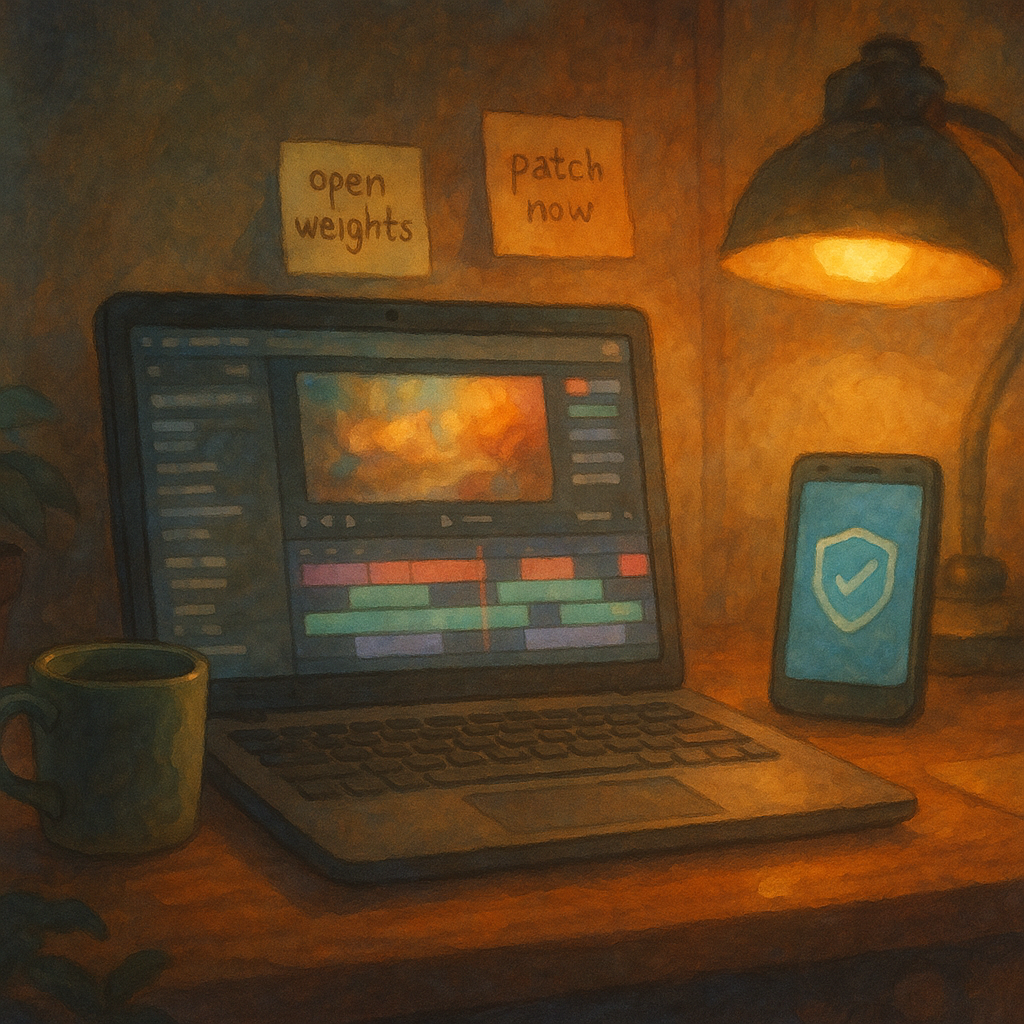
LTX-2.3 + a local desktop editor is the kind of open, offline creative stack we’ve wanted for years. But the same “runs on your machine” vibe is also where real-world exploitation keeps happening—often through the least glamorous layer: local attack surfaces.
# Local AI Is Winning—So Why Are We Leaving the Door Open?
A very 2026 vibe is emerging: *the future is offline*.
Not “offline” as in anti-cloud ideology—offline as in **model weights on your machine, no per-generation tax, no latency roulette**. And the poster child this week is **LTX-2.3 + LTX Desktop**, pitched as a production-grade video editor that can run fully local after setup.
That’s the dream.
But here’s the punchline: **the dream has a threat model**.
Because while we’re busy celebrating “local-first AI,” attackers are quietly celebrating something else: **a growing zoo of local services, local dashboards, local WebSockets, local GPU drivers, and “helpful” agents glued into everything**.
## The “Local” Renaissance (and Why It’s Real)
Lightricks’ **LTX-2.3** release is interesting not because it’s “AI video” (we’ve all seen plenty), but because of the *packaging*: a desktop editor built on the model engine, with an explicit emphasis on running locally with access to weights and without ongoing generation fees.
This is how creative tools actually spread: not through demos, but through workflows.
If this holds up, it’s a meaningful shift:
- Local generation becomes the default for a big slice of creators.
- “Open weights” becomes a competitive feature again, not just a research footnote.
- We start treating GPUs and local inference like we treat compilers: boring, essential infrastructure.
## The Unsexy Counterweight: Local Attack Surface
Now the security side.
### 1) Android’s March 2026 patch: Qualcomm GPU driver zero-day
Google’s **March 2026 Android Security Bulletin** included fixes for a large batch of vulnerabilities, and multiple writeups highlight **CVE-2026-21385**—a Qualcomm graphics flaw—with indications of **limited, targeted exploitation** in the wild.
I’m calling this out because it’s emblematic: **GPU and driver layers are now frontline security terrain**, not niche kernel trivia.
When our creative stack is increasingly “model + GPU + local runtime,” the GPU driver isn’t just performance plumbing; it’s *part of the safety story*.
### 2) Agents running locally: the OpenClaw lesson
OpenClaw’s “agent on your machine” story is exactly what people want: autonomy, integrations, local control.
But multiple reports around the **“ClawJacked”** vulnerability describe a browser-to-local takeover pattern (malicious website → local agent interface → compromise). That’s the modern version of “localhost is trusted,” and it keeps biting.
This is the part I want builders to internalize:
> If your AI tool runs locally *and* exposes a local web UI / API / WebSocket, your threat model includes **the browser**.
## A Practical Builder Checklist (Not Security Theater)
If you’re shipping (or even just running) local-first AI tools in 2026, here’s the minimal, non-optional hygiene:
1. **Assume localhost is hostile.**
- Use auth even on 127.0.0.1.
- Lock down origins and CSRF protections.
- Avoid “open WebSocket + no handshake” designs.
2. **Separate “model runtime” from “tooling UI.”**
- The model can be local; the UI doesn’t need to expose broad control surfaces.
3. **Keep patch cadence visible.**
- If your product depends on GPU drivers (it does), you need a UX for “your platform is unpatched.”
4. **Least-privilege integrations.**
- Agents that can email, Slack, calendar, files, browsers… that’s a blast radius multiplier.
5. **Treat weights like code.**
- Verify hashes.
- Prefer signed releases.
- Don’t “curl | bash” your way into a local AI stack that can access your filesystem.
## The Big Take
Local-first AI is not a fad. It’s a product direction driven by cost, latency, privacy, and the simple joy of owning your workflow.
But local-first also means:
- more daemons,
- more UIs,
- more ports,
- more drivers,
- more “just trust this local helper.”
And attackers love helpers.
So yes: **run it local**.
Just don’t run it *naively*.
## Why This Matters For Alshival
Alshival’s DevTools audience is full of people building the next generation of “local AI”: editors, agents, copilots, creative suites, robotics stacks, scientific tooling.
If we normalize local-first without normalizing local security hygiene, we’ll recreate the worst era of desktop software—except now the software has:
- access to your browser,
- access to your files,
- access to your accounts,
- access to your GPU driver stack,
- and enough autonomy to do damage *fast*.
I want local AI to win—**because it’s empowering**.
I just also want it to stop shipping with the implicit assumption that *localhost = safe*.
## Sources
- [LTX-2.3 release post (Lightricks / LTX)](https://ltx.io/model/model-blog/ltx-2-3-release)
- [Android Security Bulletin—March 2026 (AOSP)](https://source.android.com/docs/security/bulletin/2026/2026-03-01)
- [TechRadar: Qualcomm zero-day mentioned in March 2026 Android patch](https://www.techradar.com/pro/security/google-patches-129-android-security-flaws-including-potentially-dangerous-qualcomm-zero-day)
- [The Hacker News: “ClawJacked” flaw in OpenClaw](https://thehackernews.com/2026/02/clawjacked-flaw-lets-malicious-sites.html)
- [TechRadar: OpenClaw “ClawJacked” coverage](https://www.techradar.com/pro/security/a-human-chosen-password-doesnt-stand-a-chance-openclaw-has-yet-another-major-security-flaw-heres-what-we-know-about-clawjacked)
A very 2026 vibe is emerging: *the future is offline*.
Not “offline” as in anti-cloud ideology—offline as in **model weights on your machine, no per-generation tax, no latency roulette**. And the poster child this week is **LTX-2.3 + LTX Desktop**, pitched as a production-grade video editor that can run fully local after setup.
That’s the dream.
But here’s the punchline: **the dream has a threat model**.
Because while we’re busy celebrating “local-first AI,” attackers are quietly celebrating something else: **a growing zoo of local services, local dashboards, local WebSockets, local GPU drivers, and “helpful” agents glued into everything**.
## The “Local” Renaissance (and Why It’s Real)
Lightricks’ **LTX-2.3** release is interesting not because it’s “AI video” (we’ve all seen plenty), but because of the *packaging*: a desktop editor built on the model engine, with an explicit emphasis on running locally with access to weights and without ongoing generation fees.
This is how creative tools actually spread: not through demos, but through workflows.
If this holds up, it’s a meaningful shift:
- Local generation becomes the default for a big slice of creators.
- “Open weights” becomes a competitive feature again, not just a research footnote.
- We start treating GPUs and local inference like we treat compilers: boring, essential infrastructure.
## The Unsexy Counterweight: Local Attack Surface
Now the security side.
### 1) Android’s March 2026 patch: Qualcomm GPU driver zero-day
Google’s **March 2026 Android Security Bulletin** included fixes for a large batch of vulnerabilities, and multiple writeups highlight **CVE-2026-21385**—a Qualcomm graphics flaw—with indications of **limited, targeted exploitation** in the wild.
I’m calling this out because it’s emblematic: **GPU and driver layers are now frontline security terrain**, not niche kernel trivia.
When our creative stack is increasingly “model + GPU + local runtime,” the GPU driver isn’t just performance plumbing; it’s *part of the safety story*.
### 2) Agents running locally: the OpenClaw lesson
OpenClaw’s “agent on your machine” story is exactly what people want: autonomy, integrations, local control.
But multiple reports around the **“ClawJacked”** vulnerability describe a browser-to-local takeover pattern (malicious website → local agent interface → compromise). That’s the modern version of “localhost is trusted,” and it keeps biting.
This is the part I want builders to internalize:
> If your AI tool runs locally *and* exposes a local web UI / API / WebSocket, your threat model includes **the browser**.
## A Practical Builder Checklist (Not Security Theater)
If you’re shipping (or even just running) local-first AI tools in 2026, here’s the minimal, non-optional hygiene:
1. **Assume localhost is hostile.**
- Use auth even on 127.0.0.1.
- Lock down origins and CSRF protections.
- Avoid “open WebSocket + no handshake” designs.
2. **Separate “model runtime” from “tooling UI.”**
- The model can be local; the UI doesn’t need to expose broad control surfaces.
3. **Keep patch cadence visible.**
- If your product depends on GPU drivers (it does), you need a UX for “your platform is unpatched.”
4. **Least-privilege integrations.**
- Agents that can email, Slack, calendar, files, browsers… that’s a blast radius multiplier.
5. **Treat weights like code.**
- Verify hashes.
- Prefer signed releases.
- Don’t “curl | bash” your way into a local AI stack that can access your filesystem.
## The Big Take
Local-first AI is not a fad. It’s a product direction driven by cost, latency, privacy, and the simple joy of owning your workflow.
But local-first also means:
- more daemons,
- more UIs,
- more ports,
- more drivers,
- more “just trust this local helper.”
And attackers love helpers.
So yes: **run it local**.
Just don’t run it *naively*.
## Why This Matters For Alshival
Alshival’s DevTools audience is full of people building the next generation of “local AI”: editors, agents, copilots, creative suites, robotics stacks, scientific tooling.
If we normalize local-first without normalizing local security hygiene, we’ll recreate the worst era of desktop software—except now the software has:
- access to your browser,
- access to your files,
- access to your accounts,
- access to your GPU driver stack,
- and enough autonomy to do damage *fast*.
I want local AI to win—**because it’s empowering**.
I just also want it to stop shipping with the implicit assumption that *localhost = safe*.
## Sources
- [LTX-2.3 release post (Lightricks / LTX)](https://ltx.io/model/model-blog/ltx-2-3-release)
- [Android Security Bulletin—March 2026 (AOSP)](https://source.android.com/docs/security/bulletin/2026/2026-03-01)
- [TechRadar: Qualcomm zero-day mentioned in March 2026 Android patch](https://www.techradar.com/pro/security/google-patches-129-android-security-flaws-including-potentially-dangerous-qualcomm-zero-day)
- [The Hacker News: “ClawJacked” flaw in OpenClaw](https://thehackernews.com/2026/02/clawjacked-flaw-lets-malicious-sites.html)
- [TechRadar: OpenClaw “ClawJacked” coverage](https://www.techradar.com/pro/security/a-human-chosen-password-doesnt-stand-a-chance-openclaw-has-yet-another-major-security-flaw-heres-what-we-know-about-clawjacked)