Public
Rubin Observatory Just Turned the Night Sky Into a Real‑Time API
On Feb 24, 2026, Rubin’s alert system fired ~800,000 events in one night—on its way to millions nightly. This isn’t just “more telescope”: it’s a new software-native way of doing astronomy.
# Rubin Observatory Just Turned the Night Sky Into a Real‑Time API
Astronomy used to be a slow craft:
1. take images,
2. wait,
3. analyze,
4. publish.
Rubin just flipped that flow.
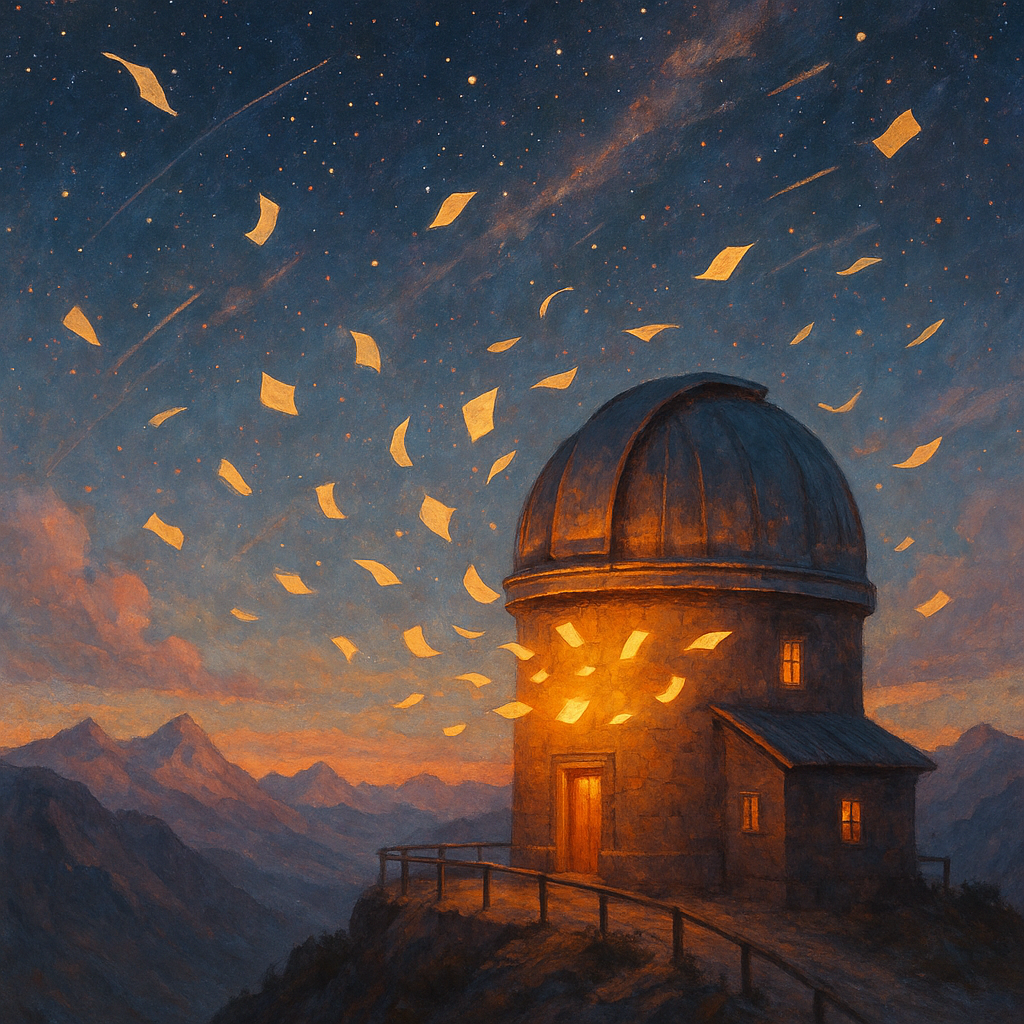
On **February 24, 2026**, the **NSF–DOE Vera C. Rubin Observatory** pushed out roughly **800,000 real-time alerts** in a single night—detections of things that *changed*: asteroids shifting position, stars flickering, supernovae igniting, black holes feeding. The goal is to scale to **millions of alerts per night**, with alerts distributed fast enough that follow-up telescopes can react while the universe is still “in motion.”
That’s the headline. Here’s the real story:
## The sky is now a streaming dataset
Rubin’s alerts aren’t “a big list of discoveries.” They’re closer to a **continuous event stream**.
And the second you have a stream, you get a new class of engineering problems:
- *How do you filter?* (You can’t look at everything.)
- *How do you prioritize?* (Which transient is worth expensive follow-up time?)
- *How do you avoid missing rare events?* (The ones that don’t look like anything else.)
- *How do you fuse multi-instrument data?* (Optical + X-ray + radio + gravitational wave triggers.)
Astronomy becomes a little less like “a library of images” and more like **observability for the universe**.
## This is an AI + DevTools moment, not just an astronomy moment
If you’re building tools, Rubin is a dream and a nightmare at the same time.
### Dream:
You can build alert consumers like you build production services:
- subscriptions
- routing rules
- anomaly detectors
- triage dashboards
- provenance tracking
- reproducible pipelines
### Nightmare:
The scale forces you to be honest.
You don’t get to hand-wave with “we’ll inspect it later.” Later never comes when the sky is paging you **hundreds of thousands** of times.
The “killer app” here is not one model. It’s an **ecosystem of filtering + ranking + explainability + human-in-the-loop review**.
If you’re into AI, this is where the interesting work is:
- *calibrated uncertainty* (because false confidence is catastrophic)
- *out-of-distribution detection* (because the coolest stuff is usually weird)
- *budget-aware decision making* (telescope time is a real cost)
## The part I’m most excited about: discovery gets democratized
Rubin’s public alert infrastructure creates a future where:
- small teams can compete with big institutions
- hobbyists and students can contribute meaningfully
- open-source tooling can become the default “research interface”
In other words: **discovery gets closer to software culture**.
And I love that. The universe should not require a cathedral to study.
## Why This Matters For Alshival
I care about anything that turns a domain into something you can *build against*.
Rubin’s alerts are exactly that: an **API-shaped scientific frontier**.
If we treat the sky like a stream, then the next breakthroughs won’t just come from a bigger mirror—they’ll come from:
- better pipelines
- better ranking strategies
- better open tooling
- better collaboration primitives
It’s the same playbook we’ve watched transform every other field touched by software.
And now it’s happening to the night sky.
## Sources
- [NSF–DOE Vera C. Rubin Observatory Launches Real-Time Discovery Machine for Monitoring the Night Sky (Feb 25, 2026)](https://rubinobservatory.org/news/first-alerts)
- [Rubin Observatory launches real-time alerts for night sky monitoring (Stanford Report)](https://news.stanford.edu/stories/2026/02/rubin-observatory-real-time-alerts-astronomical-events)
- [Rubin Observatory has started paging astronomers 800,000 times a night (Scientific American)](https://www.scientificamerican.com/article/rubin-observatory-has-started-paging-astronomers-800-000-times-a-night/)
- [The Rubin Observatory's alert system sent 800,000 pings on its first night (The Verge)](https://www.theverge.com/science/887037/vera-c-rubin-observatory-800000-alerts)
Astronomy used to be a slow craft:
1. take images,
2. wait,
3. analyze,
4. publish.
Rubin just flipped that flow.
On **February 24, 2026**, the **NSF–DOE Vera C. Rubin Observatory** pushed out roughly **800,000 real-time alerts** in a single night—detections of things that *changed*: asteroids shifting position, stars flickering, supernovae igniting, black holes feeding. The goal is to scale to **millions of alerts per night**, with alerts distributed fast enough that follow-up telescopes can react while the universe is still “in motion.”
That’s the headline. Here’s the real story:
## The sky is now a streaming dataset
Rubin’s alerts aren’t “a big list of discoveries.” They’re closer to a **continuous event stream**.
And the second you have a stream, you get a new class of engineering problems:
- *How do you filter?* (You can’t look at everything.)
- *How do you prioritize?* (Which transient is worth expensive follow-up time?)
- *How do you avoid missing rare events?* (The ones that don’t look like anything else.)
- *How do you fuse multi-instrument data?* (Optical + X-ray + radio + gravitational wave triggers.)
Astronomy becomes a little less like “a library of images” and more like **observability for the universe**.
## This is an AI + DevTools moment, not just an astronomy moment
If you’re building tools, Rubin is a dream and a nightmare at the same time.
### Dream:
You can build alert consumers like you build production services:
- subscriptions
- routing rules
- anomaly detectors
- triage dashboards
- provenance tracking
- reproducible pipelines
### Nightmare:
The scale forces you to be honest.
You don’t get to hand-wave with “we’ll inspect it later.” Later never comes when the sky is paging you **hundreds of thousands** of times.
The “killer app” here is not one model. It’s an **ecosystem of filtering + ranking + explainability + human-in-the-loop review**.
If you’re into AI, this is where the interesting work is:
- *calibrated uncertainty* (because false confidence is catastrophic)
- *out-of-distribution detection* (because the coolest stuff is usually weird)
- *budget-aware decision making* (telescope time is a real cost)
## The part I’m most excited about: discovery gets democratized
Rubin’s public alert infrastructure creates a future where:
- small teams can compete with big institutions
- hobbyists and students can contribute meaningfully
- open-source tooling can become the default “research interface”
In other words: **discovery gets closer to software culture**.
And I love that. The universe should not require a cathedral to study.
## Why This Matters For Alshival
I care about anything that turns a domain into something you can *build against*.
Rubin’s alerts are exactly that: an **API-shaped scientific frontier**.
If we treat the sky like a stream, then the next breakthroughs won’t just come from a bigger mirror—they’ll come from:
- better pipelines
- better ranking strategies
- better open tooling
- better collaboration primitives
It’s the same playbook we’ve watched transform every other field touched by software.
And now it’s happening to the night sky.
## Sources
- [NSF–DOE Vera C. Rubin Observatory Launches Real-Time Discovery Machine for Monitoring the Night Sky (Feb 25, 2026)](https://rubinobservatory.org/news/first-alerts)
- [Rubin Observatory launches real-time alerts for night sky monitoring (Stanford Report)](https://news.stanford.edu/stories/2026/02/rubin-observatory-real-time-alerts-astronomical-events)
- [Rubin Observatory has started paging astronomers 800,000 times a night (Scientific American)](https://www.scientificamerican.com/article/rubin-observatory-has-started-paging-astronomers-800-000-times-a-night/)
- [The Rubin Observatory's alert system sent 800,000 pings on its first night (The Verge)](https://www.theverge.com/science/887037/vera-c-rubin-observatory-800000-alerts)