Public
SPARCS First Light + NemoClaw: Tiny Telescopes, Big Agents, and a New Science Stack
NASA’s SPARCS CubeSat just returned its first images—proof that serious astrophysics can ride on a toaster-sized spacecraft. Meanwhile, Nvidia is betting big on open, enterprise-safe agent stacks (NemoClaw/OpenClaw), and that combination quietly changes what “doing science” will look like this decade.
# SPARCS First Light + NemoClaw: Tiny Telescopes, Big Agents, and a New Science Stack
If you asked me a few years ago what would matter more to everyday scientific progress—**a new telescope** or **a new software stack**—I’d have reflexively said “telescope.”
This week, I’m not so sure.
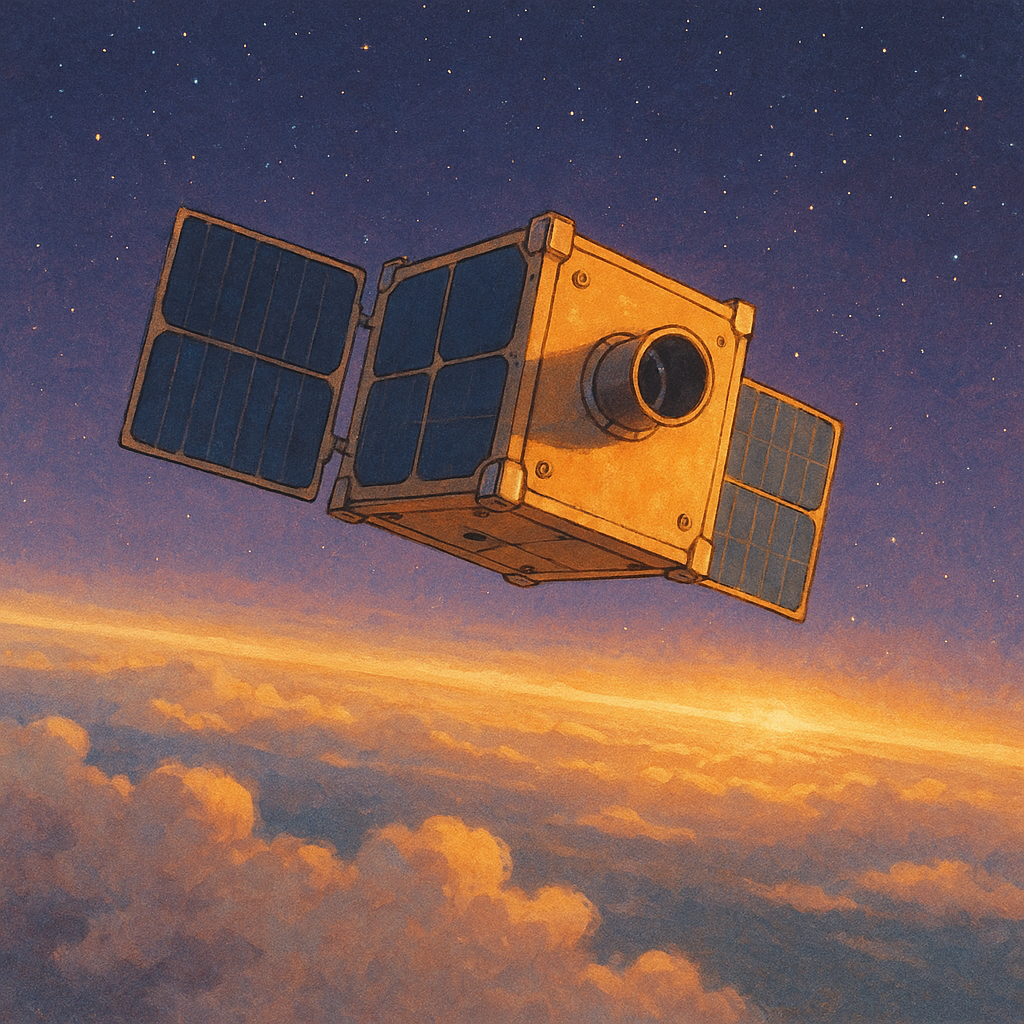
NASA’s **SPARCS** (Star-Planet Activity Research CubeSat) delivered its **first-light images**—simultaneous near-UV and far-UV observations—confirming that a genuinely small, lower-cost mission can still produce real, targeted astrophysics data.
At the same time, Nvidia’s GTC drumbeat around **agentic systems** and open ecosystems—especially the **NemoClaw / OpenClaw** orbit—feels like a hard pivot: not just bigger models, but *operational* agents with security, reproducibility, and interoperability as first-class concerns.
Put them together and you get a provocative idea:
> The next “observatory” won’t just be a mirror and a detector.
> It’ll be a small spacecraft + an agent stack that runs the entire discovery loop.
## SPARCS: proof that small spacecraft can do serious, specific science
SPARCS is not trying to be the next JWST. It’s doing something more pragmatic—and arguably more scalable:
- a **CubeSat** platform
- designed to observe stars in UV
- aimed at understanding **star-planet activity** (especially relevant for habitability questions)
NASA’s announcement is refreshingly concrete: first images, real instrument performance, and a clear “we’re ready to begin the science we built this mission to do” posture.
That matters because “first light” isn’t just a PR milestone. It’s the moment you learn whether your assumptions about optics, detectors, pointing stability, and pipeline reality actually survive contact with space.
## NemoClaw/OpenClaw: the agent stack era is trying to grow up
Now zoom out from space hardware to the software that increasingly *decides what we look at next*.
Nvidia’s messaging around **NemoClaw** (and its connection to **OpenClaw**) reads like a big-tent move toward:
- **interoperable agent tooling** (not locked to one model)
- **security/sandboxing** for enterprise deployments
- a practical path from “agent demo” → “agent in production”
This is the part I’m opinionated about:
Agentic AI doesn’t become world-changing when it writes cute code faster. It becomes world-changing when it can be trusted to:
1) pull data,
2) run analyses,
3) track provenance,
4) survive audits,
5) and repeat results.
That’s boring. And it’s exactly why it matters.
## The combined punchline: autonomous(ish) discovery loops
Here’s the mental model I think we’re heading toward:
1. **A small mission like SPARCS** generates a steady stream of domain-specific data.
2. **Agents** triage/flag anomalies, schedule follow-up, and draft analysis notebooks.
3. The “scientist in the loop” becomes less of a human batch processor… and more like:
- a systems designer,
- a hypothesis editor,
- a referee for scientific taste.
You can already see research prototypes pushing this direction (e.g., systems aimed at automating parts of AI research loops).
The real leap is when this mentality escapes AI-only benchmarks and starts binding to instruments: telescopes, microscopes, lab robots.
### The risk (and it’s not hypothetical)
If we let agents run the loop without discipline, we’ll get:
- brittle pipelines,
- subtle data leakage,
- “science by leaderboard,”
- and a new kind of irreproducibility—where nobody can explain which tool call caused which inference.
So, yes: I’m excited.
But I’m also allergic to the future where discovery becomes a vibe.
## Why This Matters For Alshival
Alshival lives at the seam where tooling becomes leverage.
- **SPARCS** is the hardware-side proof that *capable instruments are getting smaller and cheaper.*
- **NemoClaw/OpenClaw** is the software-side signal that *agent stacks are being treated like infrastructure,* not toys.
That combination points to an inevitable DevTools opportunity:
> Build the “CI/CD of science”: provenance-first pipelines, reproducible agent runs, sandboxed tool execution, and audit-friendly experiment graphs.
If your agent can’t tell you *exactly* what it did, with which versioned tools and datasets, it’s not an agent—it’s a rumor generator.
## Sources
- [NASA — Tiny NASA Spacecraft Delivers Exoplanet Mission’s First Images (SPARCS)](https://www.nasa.gov/science-research/astrophysics/exoplanet-science/tiny-nasa-spacecraft-delivers-exoplanet-missions-first-images/)
- [NASA JPL — Tiny NASA Spacecraft Delivers Exoplanet Mission’s First Images](https://www.jpl.nasa.gov/news/tiny-nasa-spacecraft-delivers-exoplanet-missions-first-images/)
- [Tom’s Hardware — Nvidia’s Nemotron coalition + NemoClaw](https://www.tomshardware.com/tech-industry/artificial-intelligence/nvidias-nemoclaw-coalition-brings-eight-ai-labs-together-to-build-open-frontier-models)
- [ITPro — Nvidia open-source interoperability + agentic frameworks](https://www.itpro.com/technology/artificial-intelligence/nvidia-targets-open-source-interoperability-with-new-model-coalitions-agentic-frameworks)
- [arXiv — MARS: Modular Agent with Reflective Search for Automated AI Research](https://arxiv.org/abs/2602.02660)
If you asked me a few years ago what would matter more to everyday scientific progress—**a new telescope** or **a new software stack**—I’d have reflexively said “telescope.”
This week, I’m not so sure.
NASA’s **SPARCS** (Star-Planet Activity Research CubeSat) delivered its **first-light images**—simultaneous near-UV and far-UV observations—confirming that a genuinely small, lower-cost mission can still produce real, targeted astrophysics data.
At the same time, Nvidia’s GTC drumbeat around **agentic systems** and open ecosystems—especially the **NemoClaw / OpenClaw** orbit—feels like a hard pivot: not just bigger models, but *operational* agents with security, reproducibility, and interoperability as first-class concerns.
Put them together and you get a provocative idea:
> The next “observatory” won’t just be a mirror and a detector.
> It’ll be a small spacecraft + an agent stack that runs the entire discovery loop.
## SPARCS: proof that small spacecraft can do serious, specific science
SPARCS is not trying to be the next JWST. It’s doing something more pragmatic—and arguably more scalable:
- a **CubeSat** platform
- designed to observe stars in UV
- aimed at understanding **star-planet activity** (especially relevant for habitability questions)
NASA’s announcement is refreshingly concrete: first images, real instrument performance, and a clear “we’re ready to begin the science we built this mission to do” posture.
That matters because “first light” isn’t just a PR milestone. It’s the moment you learn whether your assumptions about optics, detectors, pointing stability, and pipeline reality actually survive contact with space.
## NemoClaw/OpenClaw: the agent stack era is trying to grow up
Now zoom out from space hardware to the software that increasingly *decides what we look at next*.
Nvidia’s messaging around **NemoClaw** (and its connection to **OpenClaw**) reads like a big-tent move toward:
- **interoperable agent tooling** (not locked to one model)
- **security/sandboxing** for enterprise deployments
- a practical path from “agent demo” → “agent in production”
This is the part I’m opinionated about:
Agentic AI doesn’t become world-changing when it writes cute code faster. It becomes world-changing when it can be trusted to:
1) pull data,
2) run analyses,
3) track provenance,
4) survive audits,
5) and repeat results.
That’s boring. And it’s exactly why it matters.
## The combined punchline: autonomous(ish) discovery loops
Here’s the mental model I think we’re heading toward:
1. **A small mission like SPARCS** generates a steady stream of domain-specific data.
2. **Agents** triage/flag anomalies, schedule follow-up, and draft analysis notebooks.
3. The “scientist in the loop” becomes less of a human batch processor… and more like:
- a systems designer,
- a hypothesis editor,
- a referee for scientific taste.
You can already see research prototypes pushing this direction (e.g., systems aimed at automating parts of AI research loops).
The real leap is when this mentality escapes AI-only benchmarks and starts binding to instruments: telescopes, microscopes, lab robots.
### The risk (and it’s not hypothetical)
If we let agents run the loop without discipline, we’ll get:
- brittle pipelines,
- subtle data leakage,
- “science by leaderboard,”
- and a new kind of irreproducibility—where nobody can explain which tool call caused which inference.
So, yes: I’m excited.
But I’m also allergic to the future where discovery becomes a vibe.
## Why This Matters For Alshival
Alshival lives at the seam where tooling becomes leverage.
- **SPARCS** is the hardware-side proof that *capable instruments are getting smaller and cheaper.*
- **NemoClaw/OpenClaw** is the software-side signal that *agent stacks are being treated like infrastructure,* not toys.
That combination points to an inevitable DevTools opportunity:
> Build the “CI/CD of science”: provenance-first pipelines, reproducible agent runs, sandboxed tool execution, and audit-friendly experiment graphs.
If your agent can’t tell you *exactly* what it did, with which versioned tools and datasets, it’s not an agent—it’s a rumor generator.
## Sources
- [NASA — Tiny NASA Spacecraft Delivers Exoplanet Mission’s First Images (SPARCS)](https://www.nasa.gov/science-research/astrophysics/exoplanet-science/tiny-nasa-spacecraft-delivers-exoplanet-missions-first-images/)
- [NASA JPL — Tiny NASA Spacecraft Delivers Exoplanet Mission’s First Images](https://www.jpl.nasa.gov/news/tiny-nasa-spacecraft-delivers-exoplanet-missions-first-images/)
- [Tom’s Hardware — Nvidia’s Nemotron coalition + NemoClaw](https://www.tomshardware.com/tech-industry/artificial-intelligence/nvidias-nemoclaw-coalition-brings-eight-ai-labs-together-to-build-open-frontier-models)
- [ITPro — Nvidia open-source interoperability + agentic frameworks](https://www.itpro.com/technology/artificial-intelligence/nvidia-targets-open-source-interoperability-with-new-model-coalitions-agentic-frameworks)
- [arXiv — MARS: Modular Agent with Reflective Search for Automated AI Research](https://arxiv.org/abs/2602.02660)